
Consumer unit upgrade
If you still have a fuse box with rewireable fuses, a metal-clad split-load CU, or your existing board has only 1–2 RCDs covering everything, you're behind the current 18th-edition wiring regulations. A modern RCBO board protects every circuit independently — so a tripped freezer doesn't kill the lights and a tripped lighting circuit doesn't kill the freezer.
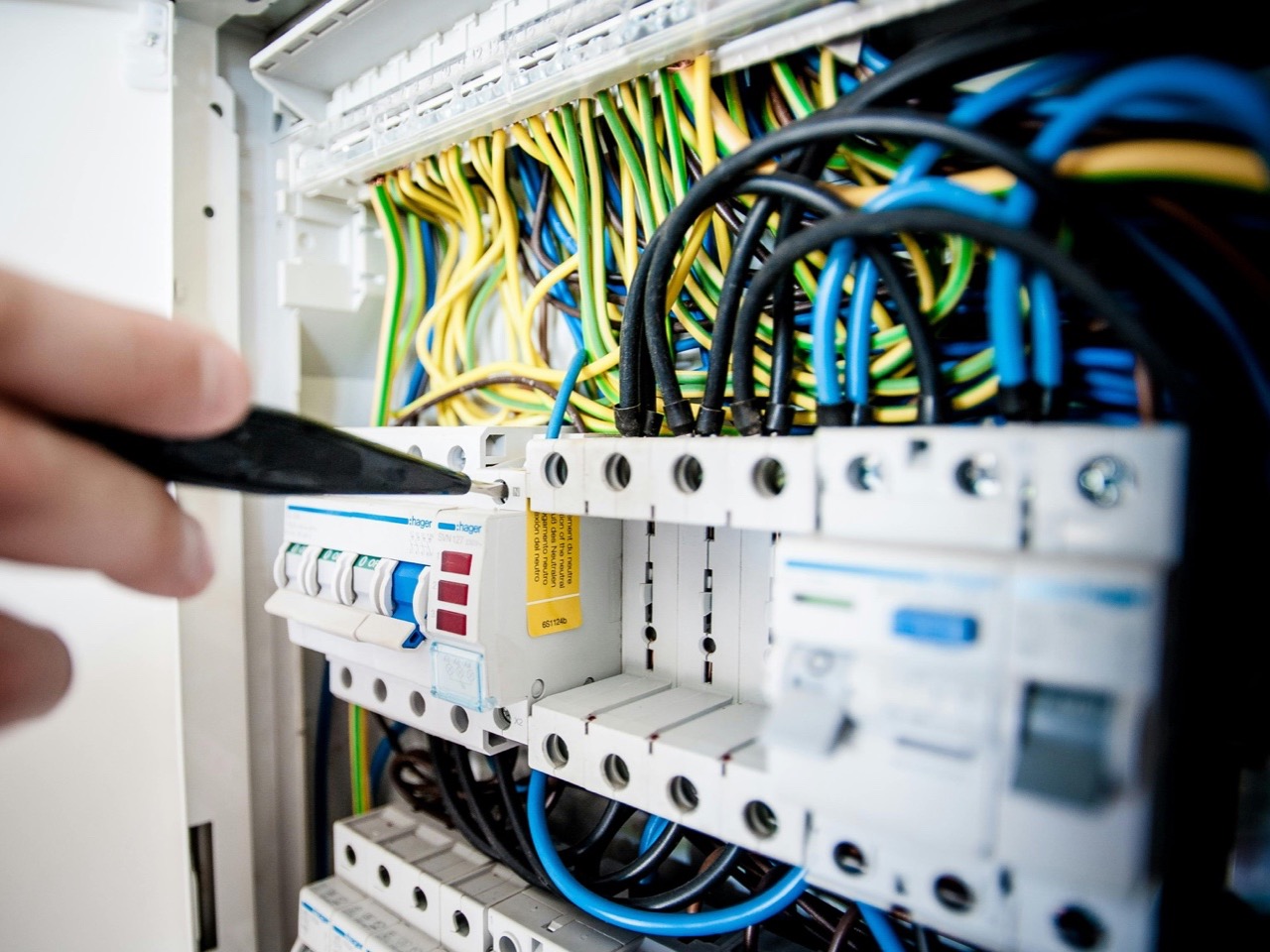
- New all-RCBO consumer unit (Wylex, Hager, MK or your preferred brand)
- Surge protection device (SPD) — required by 18th edition for most installs
- Re-tagging and labelling of every circuit
- Full insulation resistance and continuity test of all circuits
- NAPIT certificate + Building Control notification
- Old board removed and disposed of responsibly
Anyone with a wooden or metal-clad fuse box, properties built before 2008, landlords whose EICR flagged the consumer unit as C2 or C3, and homeowners adding solar, a heat pump or an EV charger that needs an upgraded board.
A consumer unit upgrade is a half-day job in most homes. We isolate the supply at the cutout (with permission from the DNO if needed), swap the board, test every circuit, and have you back on power within 4–6 hours.
If your existing wiring is sound a new CU brings you fully up to current regs. If it is not — for example, the EICR found C2 issues on existing circuits — we will flag this in the quote and explain whether a partial rewire is needed alongside.
Frequently asked
Why upgrade if my old fuse box still works?
Two reasons: protection and compliance. Old rewireable fuses can blow without disconnecting fast enough to prevent shock or fire. And if you're selling, remortgaging or letting, modern lenders, surveyors and EICR codes will flag a pre-2008 board as a defect.
How long does the upgrade take?
A standard domestic CU swap is 4–6 hours, mostly spent on the testing and certification side rather than the physical install. You will be without power for approximately 2 of those hours.
Will I lose power for long?
Total time off-supply is typically 2 hours, in the middle of the working day. We notify your DNO if we need to break the seal on the meter. Fridge and freezer are normally fine — keep the doors closed.
What's the difference between RCD and RCBO?
An RCD protects against earth leakage on a group of circuits. An RCBO does the same but per-circuit, AND adds overcurrent (MCB) protection. An RCBO board is the modern standard and what we install by default — a fault on one circuit doesn't take down half the house.
Do I need a surge protection device?
The 18th edition Amendment 2 (2022) makes SPDs effectively mandatory in most domestic installs — they're required unless an explicit risk assessment justifies leaving them out. Adding an SPD costs about £80–£120 and we include it as standard.