PAT testing
Portable Appliance Testing (PAT) checks the safety of plug-in equipment — kettles, monitors, extension leads, microwaves, IT kit. Required by HSE for most workplaces, by your insurance, and by HMO landlords as part of furniture-and-fittings safety. We provide the test, the labels, and the asset register.
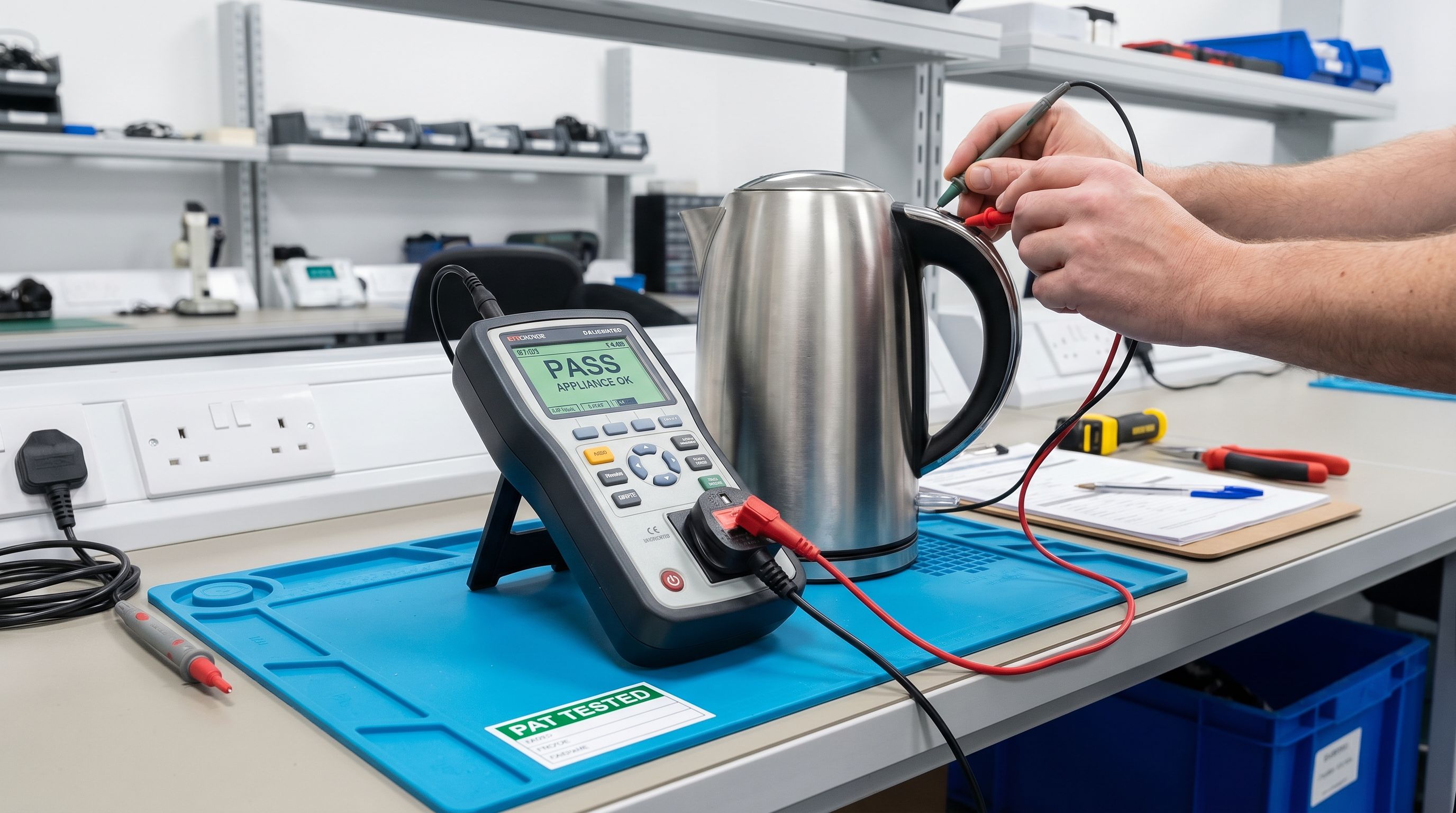
- Visual inspection of plug, cable and casing
- Earth continuity, insulation resistance and polarity test
- Functional check (where appropriate)
- Pass/fail labels with date and tester ID
- Digital asset register (Excel or CSV)
- Failed-item report with repair-or-replace recommendation
Office managers, school estate teams, hospitality (kitchen and front-of-house equipment), HMO landlords (every supplied appliance must be tested), event hire companies, and any business that has been advised by insurers or HSE that PAT testing is required.
PAT testing is not legally mandated by name, but the Electricity at Work Regulations 1989 require employers to maintain electrical equipment in a safe condition. PAT testing is the practical, defensible way to demonstrate that maintenance.
For HMO landlords specifically: every appliance you supply (cookers, microwaves, kettles, lamps) must be in safe working order. PAT-tested labelling is what most letting agents and licensing authorities expect to see.
Frequently asked
How often should I PAT test?
Frequency depends on use and environment. Office IT: 2–4 years. Construction tools: every 3 months. Catering equipment: yearly. Hire equipment: before each hire. We agree a schedule based on your equipment mix.
Is PAT testing legally required?
There's no specific PAT testing law. The Electricity at Work Regulations 1989 require equipment to be maintained safe. PAT testing is the standard, accepted method of demonstrating compliance, and most insurers and HMO licensing schemes specifically require it.
Can I PAT test my own equipment?
You can if you're trained as a "competent person" and have suitable test equipment. In practice, the cost of a PAT tester (£300–£800) and training plus the time it takes mean it's usually cheaper to outsource for any business with under ~50 items.
Do you test fixed equipment too?
Hardwired equipment (cookers, electric showers) is covered by an EICR, not PAT. We can do both visits in one trip if you need both — common in HMOs and rental properties.
How long does it take?
A typical office of 30 staff (about 100 items including monitors, kettles, lamps and chargers) takes 3–4 hours. We work around your team and prioritise meeting rooms and shared kitchens to minimise disruption.